%3Aformat(webp)%2Fheader_media%2Fb35575ea-0363-44a2-84fc-57e027c0aacb-44412779190_d6c96350d6_b.jpeg&w=1920&q=75)
Svalbard- SW
Ice-free almost all year thanks to the Gulf Stream
Information about Svalbard- SW
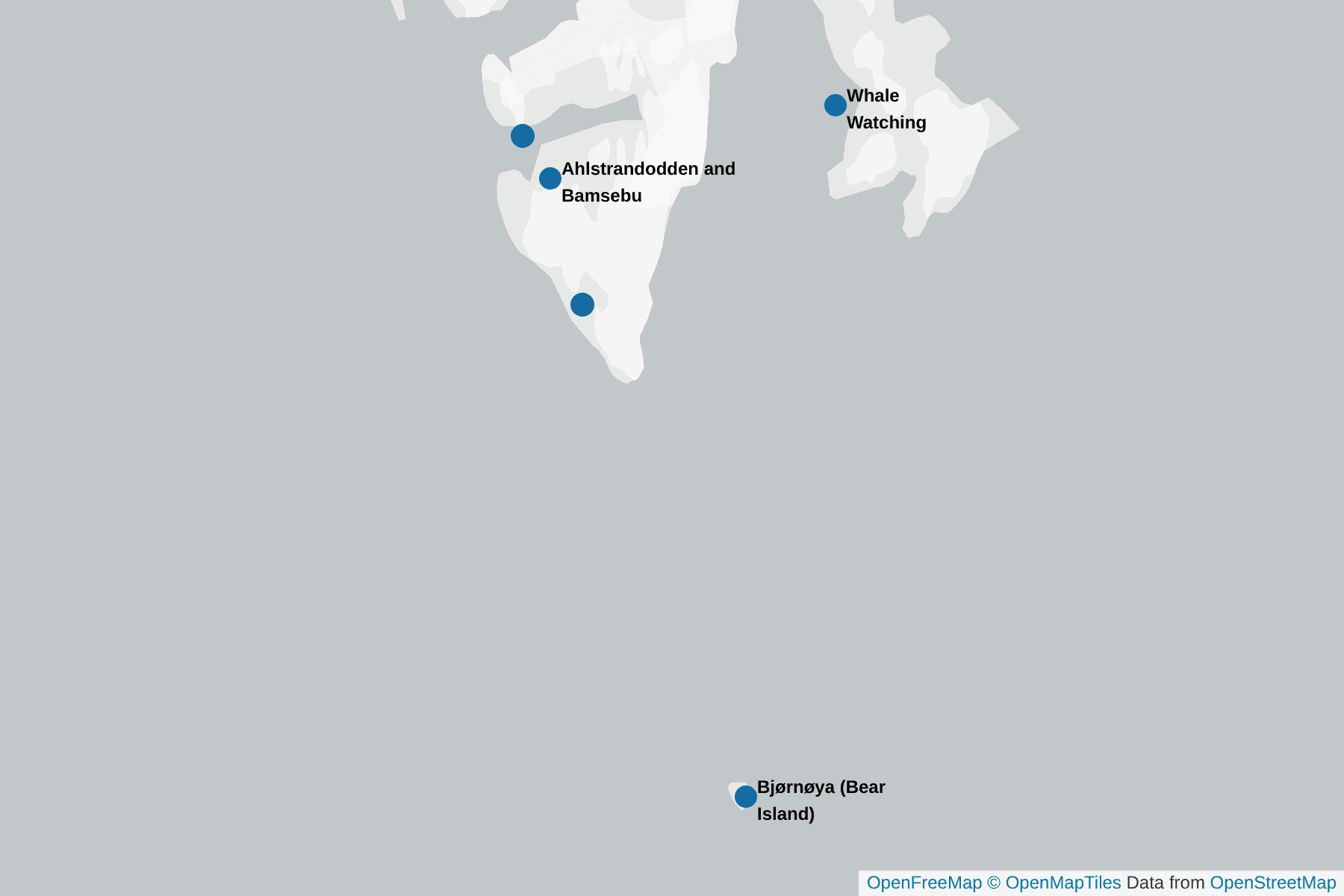
Spitsbergen is the largest island in the Svalbard Peninsula, and the only one to have a permanent population.
The southwestern part of Spitsbergen benefits from facing the warmer waters that the Gulf Stream carries into this part of the Greenland Sea. This means that the shores and waters here remain ice-free for much of the year except the coldest winter months. The one area that tends to retain 'fast ice' the longest (sea ice attached to the land) happens to be the most southerly fjord, Hornsund.
As well as a warmer arctic climate than many other places on the same latitude, Spitsbergen benefits from long months of the arctic "midnight sun", when the sun doesn't set at all between the 20th of April and the 22nd of August.
The combination of long daylight hours and a warmer climate means that Spitsbergen is a haven for birdlife with the chance to sail into the heart of this part of the island surrounded by glaciers, offering stunning and rugged vistas, with some amazing geology. There is tendency to try for landings in Bellsund, and combine landings and ship cruising and Zodiac cruises in Hornsund, with some impressive glacial fronts.
Interesting facts about Svalbard- SW
Our expert guide says: 'The waters off the southwest of Spitsbergen are usually fantastic for whale watching. It's rare that you won't spot a humpback or fin whale, it is a good location for White-beaked Dolphins, and a good chance of seeing blue whales and, if you go into deeper waters, sperm whales. This is some of the best whale watching in the world!'
Pictures of Svalbard- SW
+2
%3Aformat(webp)%2Fheader_media%2F08ed9e72-fdb6-429e-8c0a-07266ce2e7e2-44126318434_7810e3d51c_b.jpeg&w=1920&q=75)
Our highlights in Svalbard- SW
%3Aformat(webp)%2Fheader_media%2F014bc3e0-3e60-4865-854a-321f3e029e03-konstantinovka_ga-shamna.jpeg&w=1920&q=75)
%3Aformat(webp)%2Ftrip%2F28c0f9a5-6d09-47ff-a69a-5d38b9fcbcc5-arctic-svalbard-cliff-landscape-birds.jpg&w=1920&q=75)
%3Aformat(webp)%2Fheader_media%2F216aaa8f-f384-4163-ac32-684eb9d6461e-quarkexpeditions_spitsbergen-in-depth_quark-expeditions_spitsbergen-in-depth_davidmerronarctic2018-96.jpg&w=1920&q=75)
%3Aformat(webp)%2Ftrip%2F7e14a944-cc36-4315-813f-68cd611bf8dd-qat63c-g.jpg&w=1920&q=75)
%3Aformat(webp)%2Fheader_media%2F01d6b6ee-df2e-48ce-8b96-434a23c79658-quarkexpeditions_spitsbergen-in-depth_svalbard_reindeer_sundneset_credit-acacia-johnson_12.jpg&w=1920&q=75)
%3Aformat(webp)%2Fheader_media%2F28808a6f-0cbd-4450-bb36-2612bb156f77-ter-y_i_haram_kommune..jpg&w=1920&q=75)
%3Aformat(webp)%2Fgal%2Fanimal%2FWhales_Dolphins_174_of_240_.jpg&w=1920&q=75)
%3Aformat(webp)%2Fheader_media%2F88ac8343-c73b-4213-8cba-f3ad9694ff8c-_ycp6884.jpg&w=1920&q=75)
%3Aformat(webp)%2Fheader_media%2F19ff55e6-ec5f-430f-8535-ab1eb93db52e-arctic-fox.jpg&w=1920&q=75)
%3Aformat(webp)%2Fheader_media%2Fd8691e12-e8d3-4ca2-8b17-09dabaf2221c-arctic-tern-wikipedia-.jpg&w=1920&q=75)
%3Aformat(webp)%2Fheader_media%2F11625bb4-efeb-4aee-819b-afee907089f2-scotland_isle_of_st_kilda_puffin_002_ss.jpg&w=1920&q=75)
%3Aformat(webp)%2Fheader_media%2F7c25aa03-8011-4318-9245-7551c8360d35-barnacle-goose.jpg&w=1920&q=75)
%3Aformat(webp)%2Fheader_media%2F2f21b357-6437-45fb-b290-f06e28fc9687-bearded-seal-oceanwide-expeditions-.jpeg&w=1920&q=75)
%3Aformat(webp)%2Fanimal%2Fac74dfba-5725-4c47-b657-15836f546bb4-beluga.jpeg&w=1920&q=75)
%3Aformat(webp)%2Fheader_media%2F55623291-da7c-4e7a-849a-7780b094d8e1-5068862567_11e4b395ef_b.jpeg&w=1920&q=75)
%3Aformat(webp)%2Fheader_media%2F1146848a-e64f-453d-848b-447a24628c41-42262496114_d98f967cde_b.jpeg&w=1920&q=75)
%3Aformat(webp)%2Fheader_media%2F45cedc06-3ea1-456c-b9db-92cf529e3556-blue-whale-pixabay-.jpg&w=1920&q=75)
%3Aformat(webp)%2Fheader_media%2F2a19c1eb-d039-4e90-9183-c75c54933ee0-common_eider_male_at_jones_beach_-04702-.jpeg&w=1920&q=75)
%3Aformat(webp)%2Fheader_media%2F91d2ddf5-f026-40ec-8097-2029bbca4186-fin-or-finback-whale.jpg&w=1920&q=75)
%3Aformat(webp)%2Fheader_media%2Fd4f10d97-cbb1-4f2f-aa2e-4433a5a9a896-glaucous_gull_-larus_hyperboreus-_with_offspring-_liefdefjord-_svalbard.jpeg&w=1920&q=75)